

The Peach
An edible history & some thoughts on the state of things.

The Edible History X MackBecks jewelry collaboration is live! Oyster bolos, pineapple pins and Anthora coffee cups inspired by this newsletter are all available here 🍍🦪☕️

I recently signed up for a CSA box. Though I am a farmers market enthusiast (I could spend a small fortune at the Union Square farmers market in August) I have never actually done this whole CSA thing. So, as I navigate a lack of cooking inspiration, and to be frank, some summertime blues, I thought this might be the right thing to get me back into the kitchen. Or at the very least, it would force me to cook — lest an entire box of produce go bad.
The first box came with white peaches. I ate them standing over my kitchen sink, staring into space, as juice ran all over my hands and face. This is how you are supposed to eat fruit in the summer.
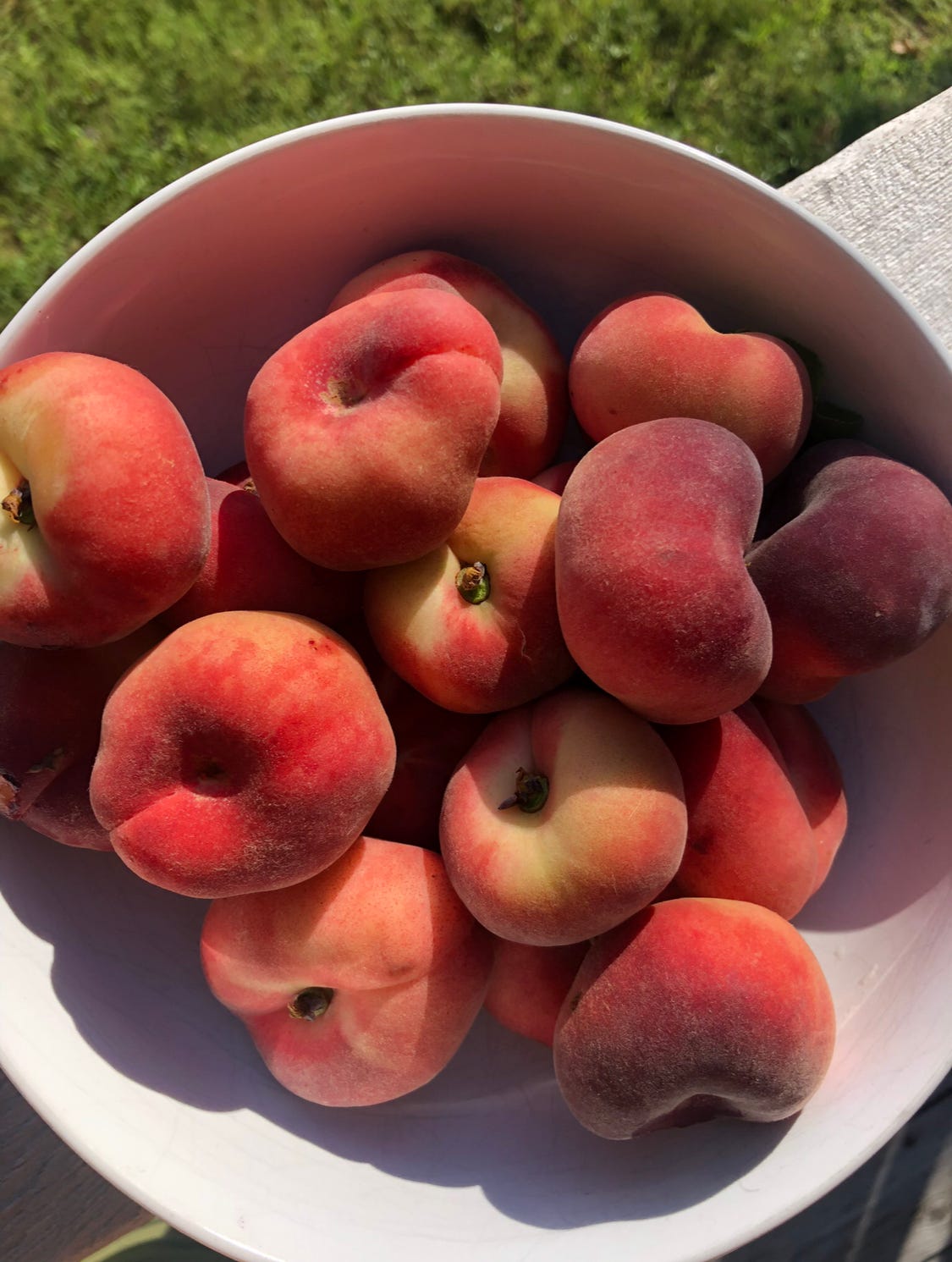
My second box also came with peaches – this time yellow ones. I plan on grilling a few of them later this weekend – alongside whatever protein ends up on the grill. The rest of the yellow peaches were consumed at the sink, while the radio buzzed the evening news quietly in the background. I bit through the soft fuzzy skin to the sweet juicy flesh, and thought about how I need to buy more dish soap. How I would like to burn my copy of Hillbilly Elegy (but also how I will never burn books and be like them). And maybe not surprisingly, the thought occurred to me, “Where do peaches actually come from?”
I’ve spent years studying the Columbian Exchange; the movement of plants and animals across the globe in the 15th and 16th centuries as a consequence of 1492. As a result, I have a pretty good understanding of where most fruits, vegetables and spices originate and their migration patterns. But somehow, the peach has evaded me.
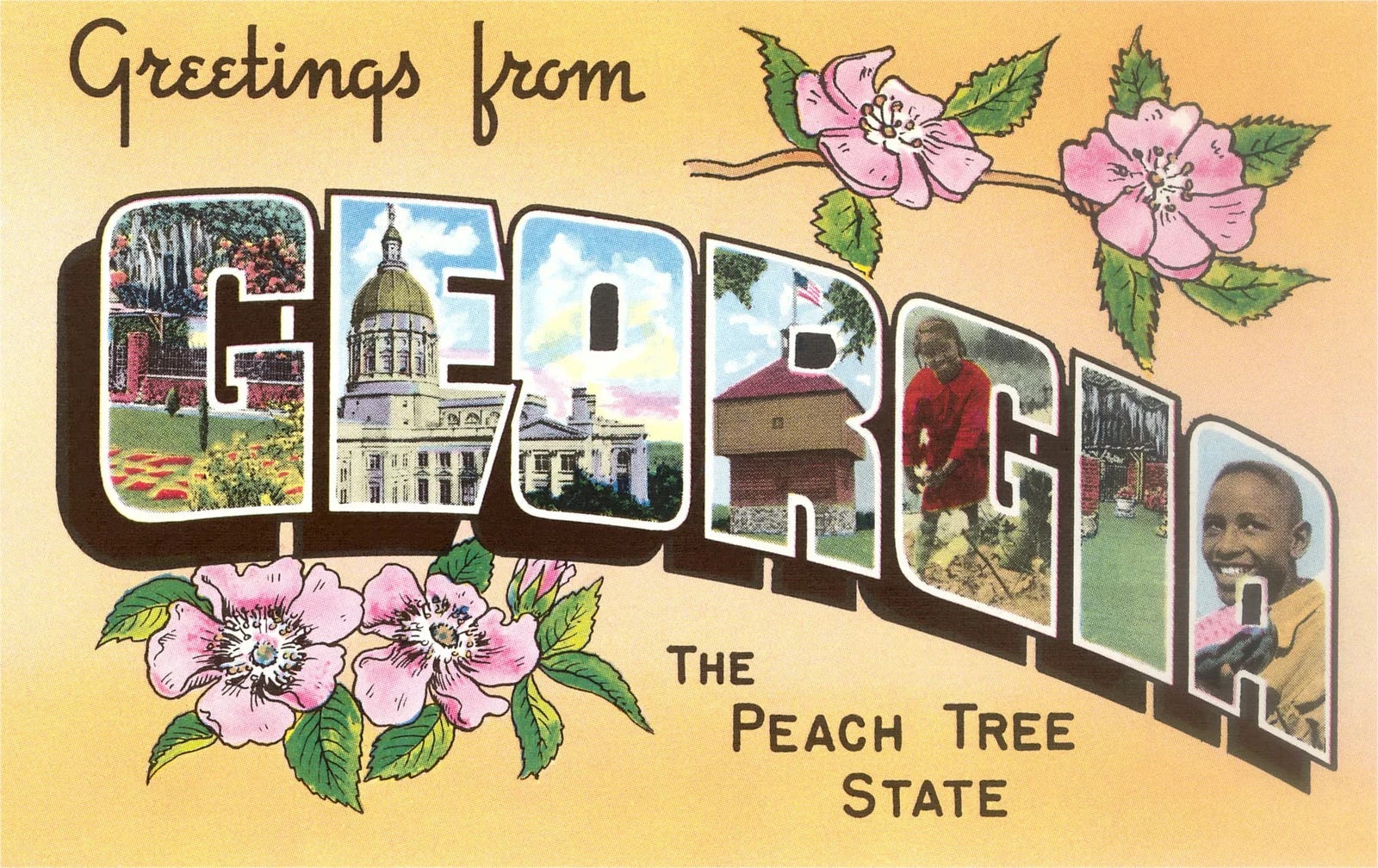
Peaches are everywhere in the summer in the U.S. And though American indoctrination would have me believe that peaches come from Georgia, the Peach State, famous for its three P’s (peaches, pecans and peanuts), I know better than to believe the slogans.
A little research (actually just a very quick Google search) and it turns out peaches originated in China. The peach began its journey west in ancient times, traveling through Asia and the Middle East via the Silk Road. By the first century CE we can find recipes using peaches in the Roman cookbook, Apicius.
It took longer for the peach to make its way to the New World. Some theories dictate that the peach arrived with Spanish monks in St. Augustine, Florida in the mid-1500s. Others believe they arrived with the English, and were planted in early colonies in Virginia and Massachusetts. The first records of peaches growing in America come from the early 17th century: in 1633, a Dutch sea captain who went by the name De Vries saw peach trees in Virginia on the property of a man named George Minifie outside of Jamestown. Decades later, William Penn, who founded the Province of Pennsylvania in 1681, wrote in his diary,
“The fruits I find in the woods are white and black mulberry, chestnut, walnut, plums, strawberries, cranberries, hurtleberries, and grapes of diverse sorts. Here are also peaches and very good and great in quantities, not an Indian plantation without them; but whether naturally here at first I know not. However, one may have them by bushels for very little; they make a pleasant drink and I think not inferior to any peach you have in England, except the true Newington.”
However the peach got to America, it thrived in its new home. In Georgia, peaches grew exceptionally well, and in Fort Valley, a town near the so called “peach belt” the peach was celebrated in an annual festival. From 1922-1926, the Peach Blossom Festival would draw in thousands of visitors from across the United States. There were floats, speeches made by various governors and members of congress, a barbecue and even a pageant to name a new Peach Queen (in 1924 the queen of the festival wore a pearl encrusted gown that belonged to the film star Mary Pickford).

Every year the festival would tell the story of the peach and its journey to America. The fruit, personified by a young maiden, would search the world for her husband, traveling from China (the original home of the peach), to the Middle East, to Spain, to Mexico (I guess this peach history had the fruit arriving in Mexico, not Florida), finally arriving in Georgia – the real spiritual home of the peach – where she would find her mate for life. Thus, a national myth was born.
As William Thomas Oakie wrote of these festivals in Smithsonian Magazine, “The story they told of Georgia as the ‘natural’ home of the peach was as enduring as it was inaccurate. It obscured the importance of horticulturists’ environmental knowledge in creating the industry, and the political connections and manual labor that kept it afloat.”
In the early years of America there was abundance. There were veritable Gardens of Eden, up and down the eastern seaboard, where peaches grew in such huge quantities they were sometimes used as hog feed. But it turned out, the New World peach wasn’t immune to disease. Suddenly, Peach Tree Short Life, Brown Rot, San Jose Scale, and pests like Plum Curculio, began to devastate crops. In 1889, the Michigan State Horticultural Society wrote of Peach Yellows disease, “At present the United States appears to have exclusive possession of this most insidious and destructive disease.”
In 2017, the state of Georgia lost 80% of its annual peach harvest because of a very warm winter and an early spring freeze. In 2023, another warm winter and early spring freeze wiped out 90% of the peach harvest. In May of this year, Georgia peach farmer Lawton Pearson declared 2024 to be the worst harvest of his lifetime (I guess it can get worse than 90% devastation).
Last week, a friend in the U.K. was lamenting to me that it’s been a miserable summer of weather across the pond. Cold, wet and dreary. I told her I was jealous (New Yorkers: just imagine how amazing a cool breeze would feel right now). Of course, the grass is always greener, and New York has always been hot in the summertime. But there’s something about this summer specifically – the soaring temperatures, the heat dome, the 70% humidity, the daily “extreme heat” warnings – that is landing differently. Because, as one friend whispered to me recently as we exited the safety of air conditioning and emerged into the sweltering heat of the street, “It’s only going to get worse.”
Scientists predict we have X many years till X, Y and Z catastrophic events begin to unfold. But for many of us, here in the United States, we’re already living in that future. Fires, hurricanes, floods, orange skies, heat so extreme it will literally kill you. The American South is proving to be uninhabitable for humans. The coasts are following. And to top it all off – apparently we’ve decided to slow walk into Fascism. Without even putting up a fight. Because the ego of an old white man is more important than the future of Planet Earth.
The nightmare is already here.
As I receive a neat and tidy box of perfectly ripe peaches (grown in upstate New York), delivered to the doorstep of my air conditioned Brooklyn apartment, I can’t help but wonder – how long is this going to last? When the Peach State can’t even grow peaches anymore, perhaps it is time to accept that the national myth no longer works. The story is over and it’s time for peaches to grow somewhere else.
Somewhere else. That is, if there even is a “somewhere else” where peaches can grow.
Edible History is a reader supported newsletter. To support my work and to gain access to the full archive of posts (each month paid subscribers receive additional edible histories and recipes in their inbox) consider upgrading to become a paid subscriber.
I’ve found that the only thing that works to stop my existential spiral about the state of the world is to work with the earth and share life skills like sewing, farming, and making herbal medicine with people in my community. I have to literally touch grass to stay grounded!